We kept a sketchbook and throughout the block and filled it with marks and textures made from different tools.
I started making marks with string soaked in gouache. I really liked those and continued that in a lot of my sketchbook.
Foundations 2018 – 2019
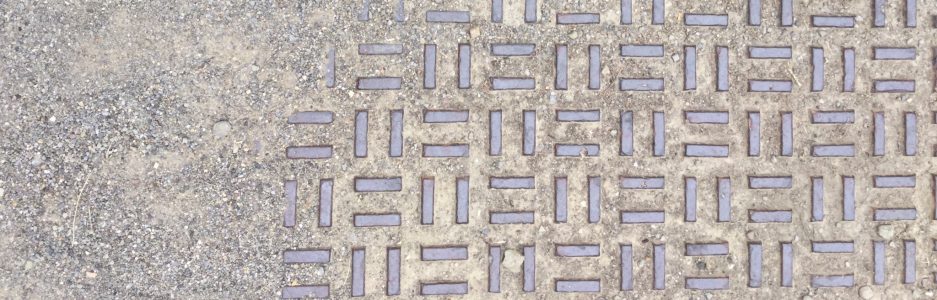
We kept a sketchbook and throughout the block and filled it with marks and textures made from different tools.
I started making marks with string soaked in gouache. I really liked those and continued that in a lot of my sketchbook.
Today we critiqued our final piece for SEE Lab. I got a lot of great suggestions including smoothing out the aluminum foil, and paying more attention to covering the bits of cardboard peeking through. I was encouraged to think about what is the proper way to document this piece and whether the outfit itself was the art or whether its interaction with the surroundings was art. I really like this because one of the inspirations for the piece, Yayoi Kusama makes costumes that interact visually with their surroundings. For my final documentation I did this with the artwork surrounding the space. My favorite photo from that is below.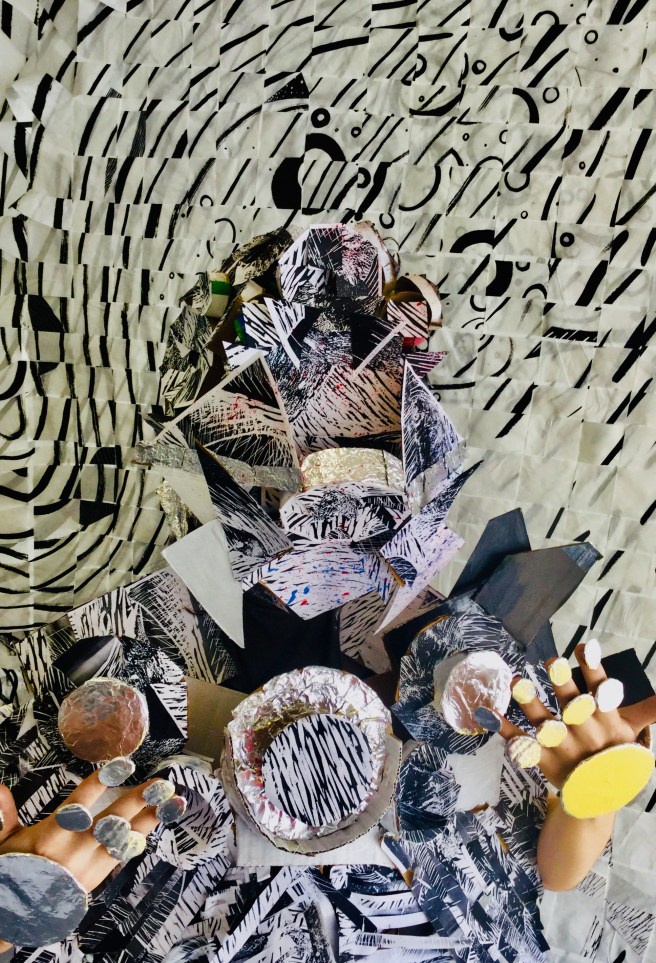 Dale Mott Slater’s tapestry is the background for this photo.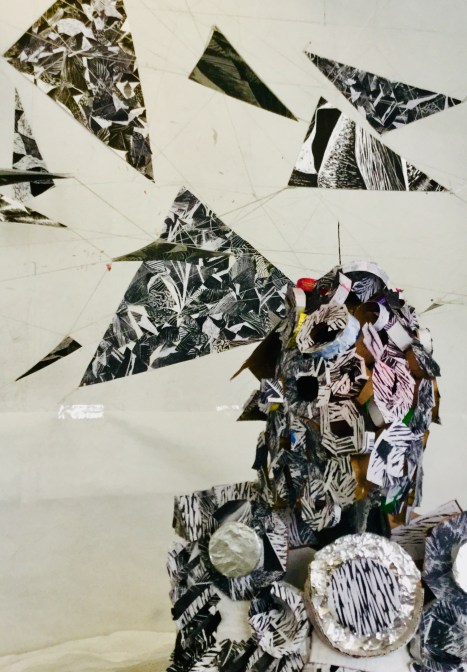
Julianna Dougherty’s installation is the background of the photographs above and below.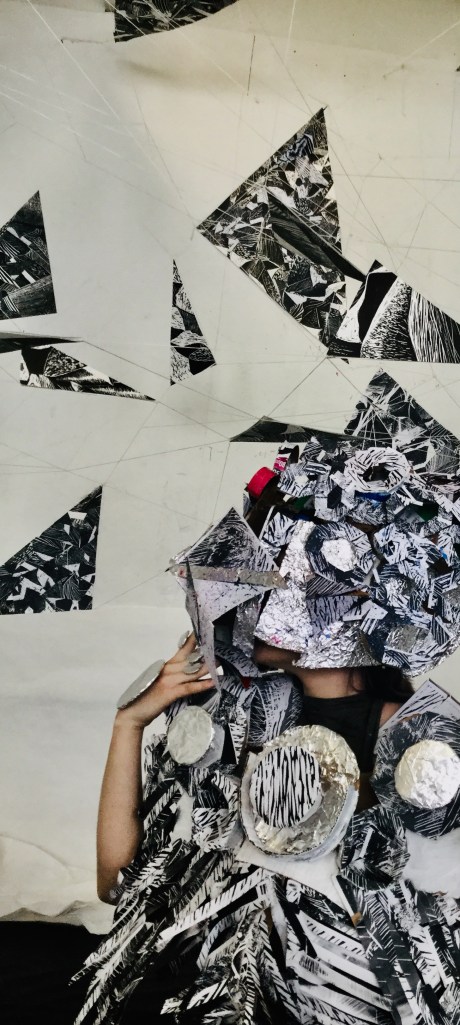
Reflection: I had a lot of trouble with getting this project to the point of being “finished”. I spent a lot of time creating the base structure and then going back and deconstructing and just repeating that cycle over and over. I had so many ideas and plans and I wound up spreading myself thin. I do not think I created what I envisioned and now I see the flaws in my method of working. Hindsight’s 20/20 right? A very small contribution to this may have been the daily canvas/blog updates. I think they made me feel a bit rushed and constrained within my own initial ideas. Going back I would probably spend a day brainstorming a variety of projects that are intentionally very different from one another, and then really think about which one would be feasible and produce a good final product. I think I took some risks this time around and I hope that some of them payed off, but I can definitely see where my work fell short in scale, craftsmanship, and presentation.
Finishing everything up today. Started with fitting a face mask this morning.


After finishing up the back of the helmet
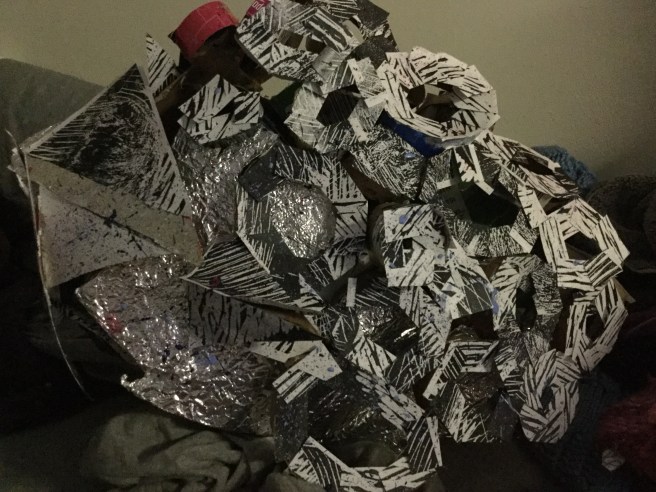
Working on Arm/Shoulder area
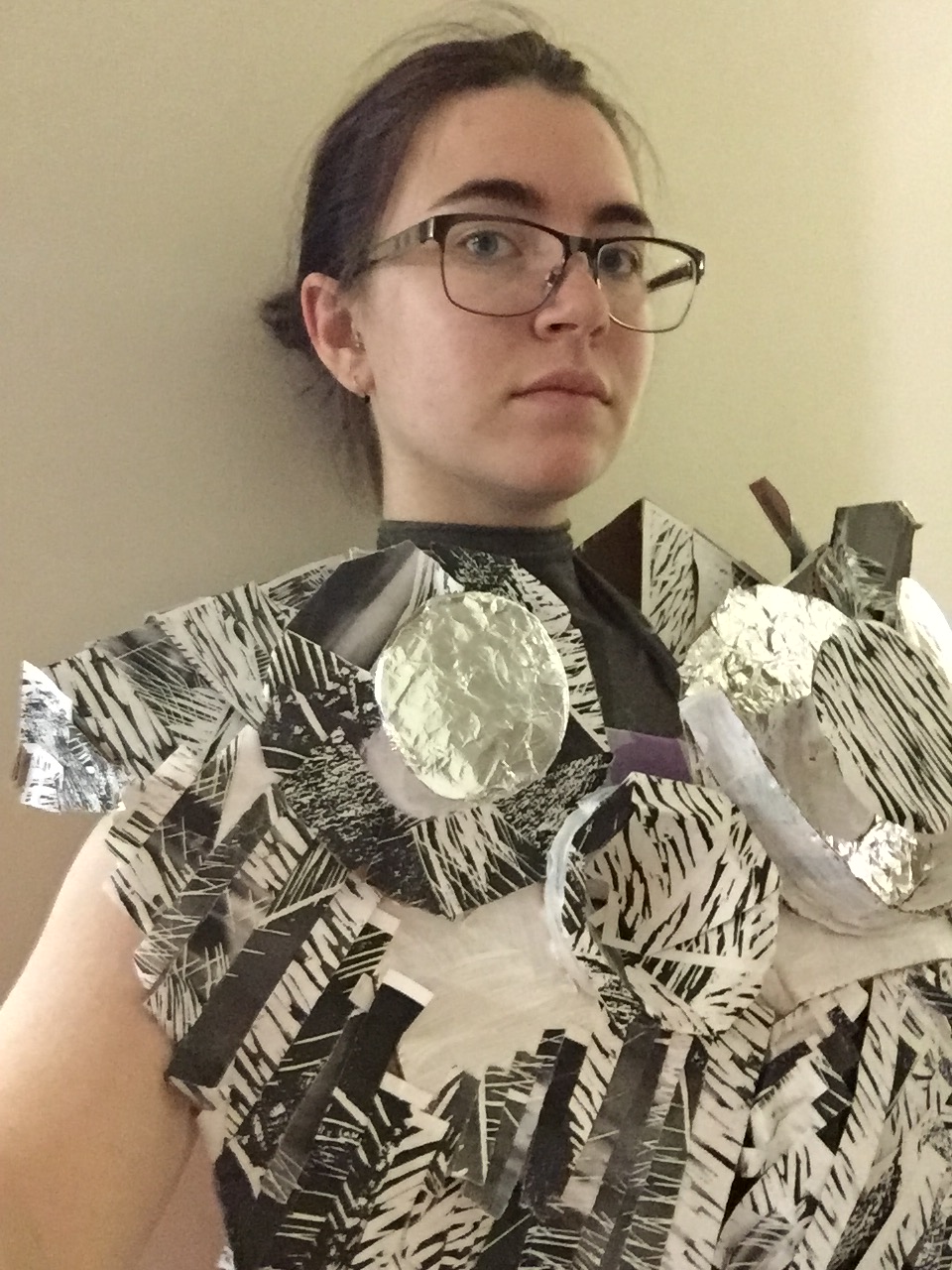
Color!!! (I was originally going to paint, but I like the colored light better)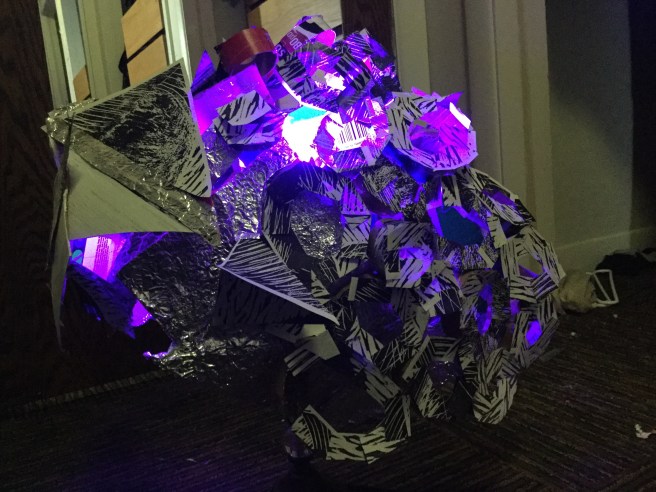
Lots of work crammed into one picture. I photocopied my prints cut them apart and put them on the large cardboard piece I constructed yesterday. Wasn’t super thrilled with how it looked as a helmet so it is going to be either a chest piece or something else. Trial and error coming up with a new helmet design. Found a way to secure the chest piece to me with fabric.
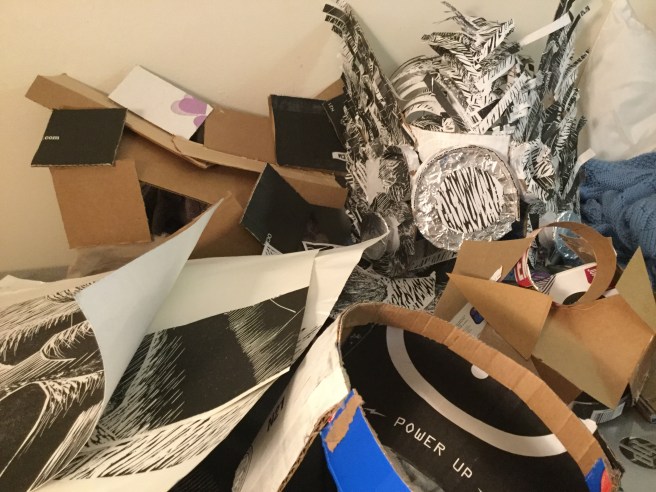
Lots of cardboard construction today, working on a possible helmet and circles for gauntlets. Just the start of a chestpiece.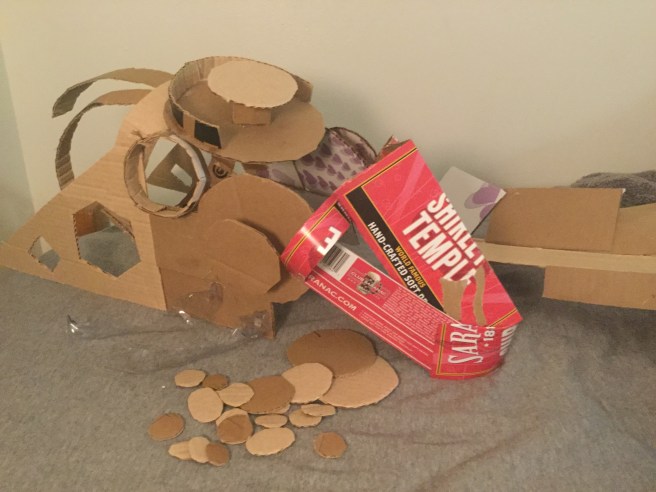
Just some sketches today, thinking about the components and how they can relate to each other. 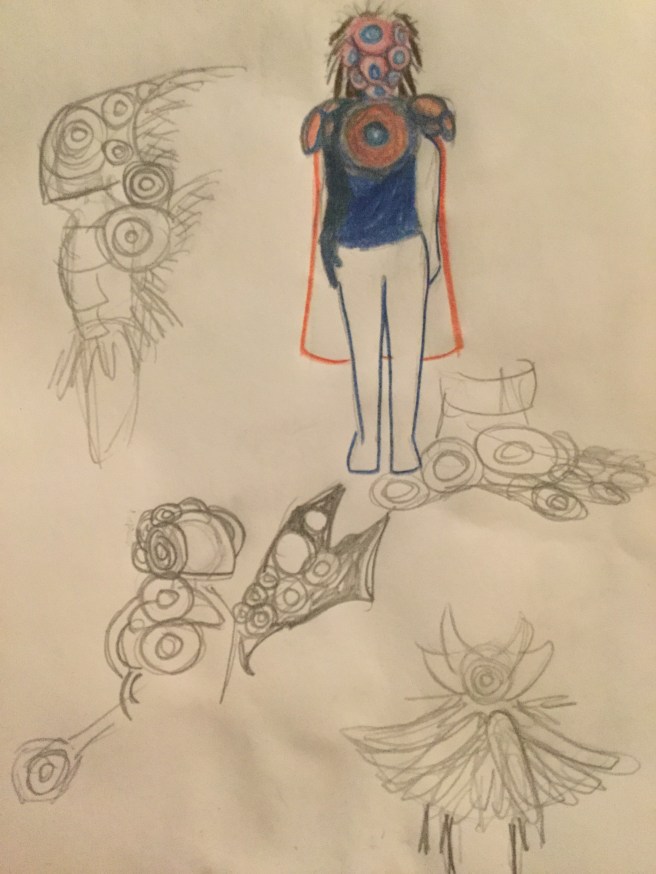
Using one or all of the rest of your prints, rework them to create a new piece of work based on the primary SEElab principles.
LIGHTSURFACECOLOURMARK
Things to consider:
The finished piece must reflect 12+ hours of independent work.
It can be 2D or 3D, and take the format of collage, drawing, painting, sewing…. think about the works and research you have made so far this semester. This has all been research that should inform your project.
Be thoughtful about your work. Document your progress
Wearable sculpture, armor like? Disrupts the human form. Some kind of interaction with light. Wide brim with cut-outs that cast shadows? Thinking about presentation and maybe setting up clamp lights.
Artists for Inspiration
Nick Cave (Sound Suits)


images from
http://badatsports.com/2009/the-soundsuits-of-nick-cave-contemporary-art-or-material-culture/
https://www.artspace.com/nick_cave/soundsuit_4
Yayoi Kusama


images from
https://www.modernamuseet.se/stockholm/en/exhibitions/yayoi-kusama/art-and-fashion/
http://www.anothermag.com/art-photography/8094/ten-things-you-might-not-know-about-yayoi-kusama
Wassily Kandinsky


images from
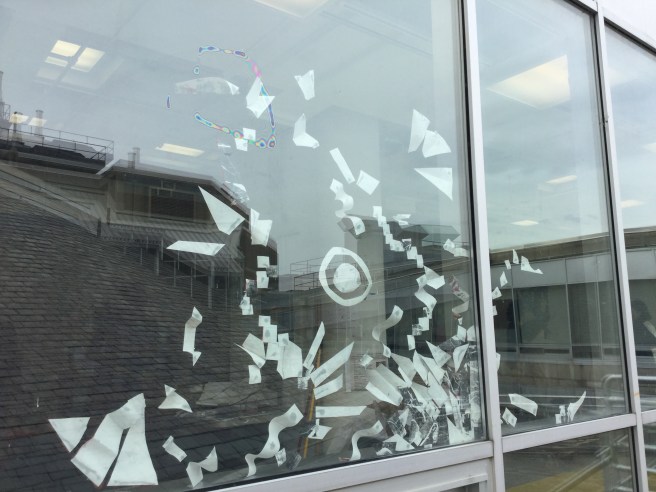
Today in class we chose our 2 worst prints and got into groups of 2. We deconstructed and reconstructed them while thinking about installation, space, color, and light.
Original Prints


Installation
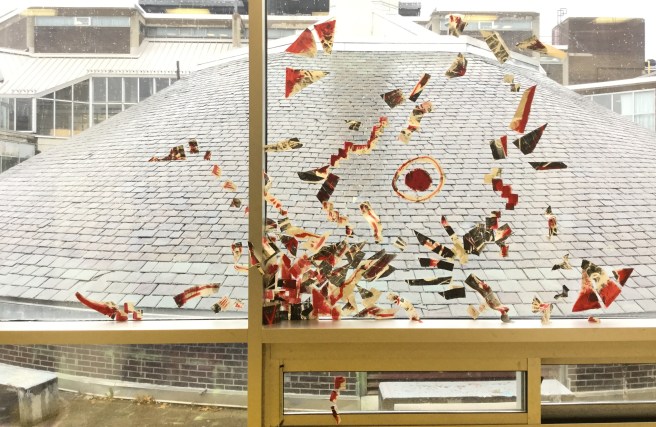
View from outside
Based on the group critique of your drawings, you have selected your strongest composition and know how to improve upon it. Transfer this drawing to your woodblock (freehand or graphite tracing is fine). Using the tools provided, consider positive and negative space while carving your block, paying special attention your experience and ability to use a large variety of marks to add interest and variation to your image. Refer to your marking making / texture workbook. Consider:
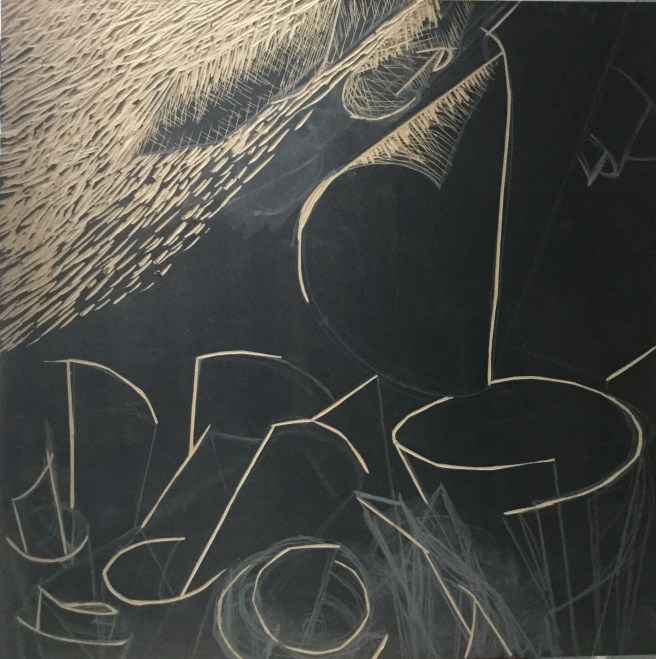
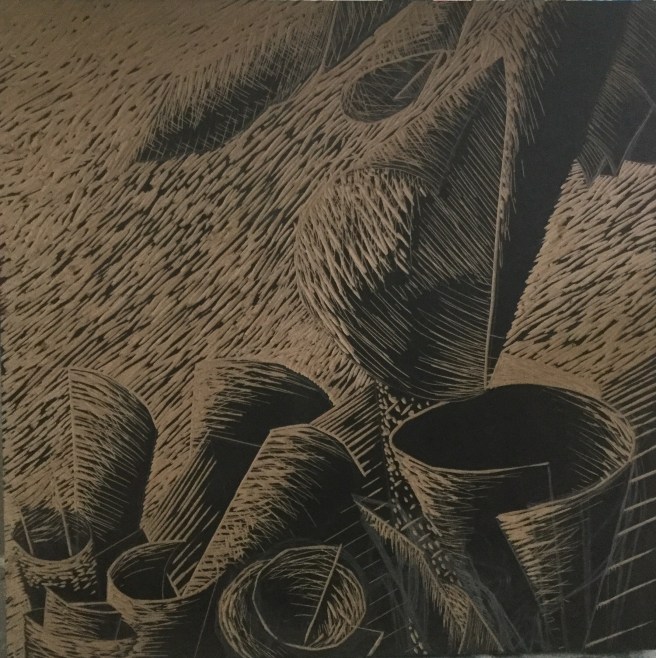
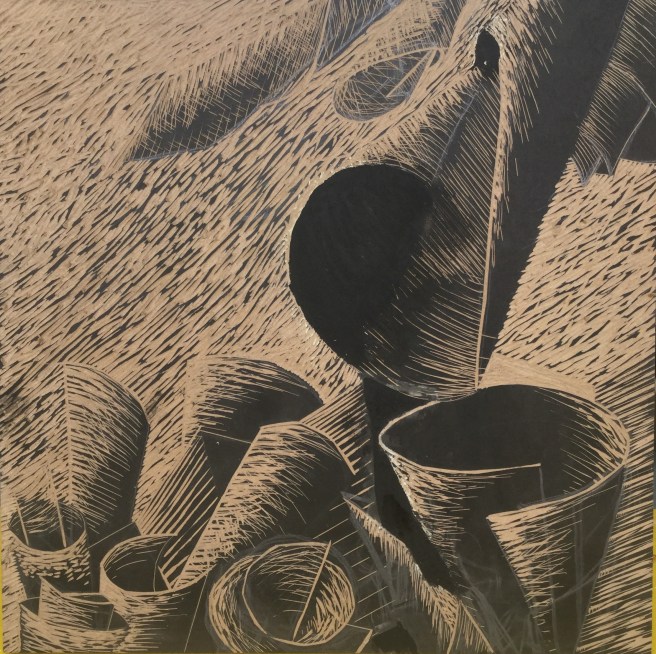
Reflection on Carving
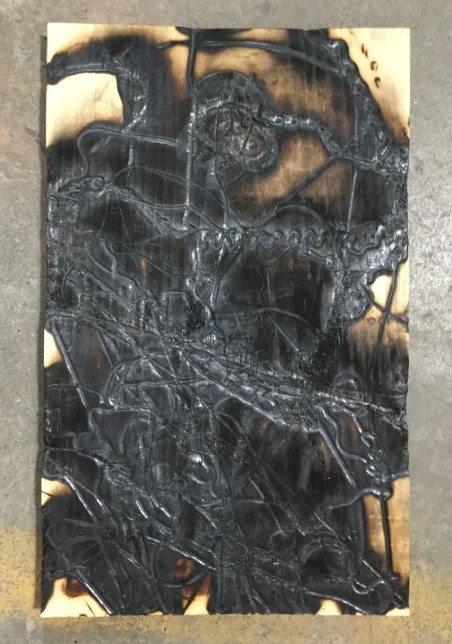
Carving the wood was difficult and I found myself making very aggressive sharp movements to remove the amount of material I wanted. This led to me over carving some sections that messed with the way the light was supposed to hit the forms. I tried to fix this by using wood filler. The resulting texture can be seen on the final prints.
Prints:


Best Print:
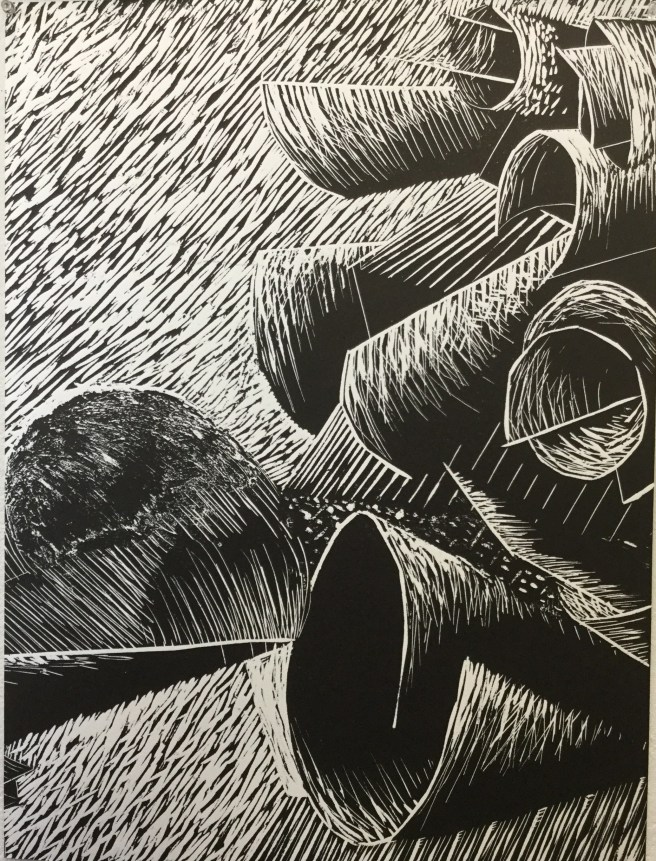
Considering all you have learnt so far this semester about line, composition, texture and mark making, you will be gathering molten glass from the furnace to create a woodblock. We will be using the marked board to take residue prints in the Print Studio next week. You are using a new material that is completely foreign to you, yet you must still consider and reference the mark making and texture research you have been conducting all semester.
Things to consider:
Best Print
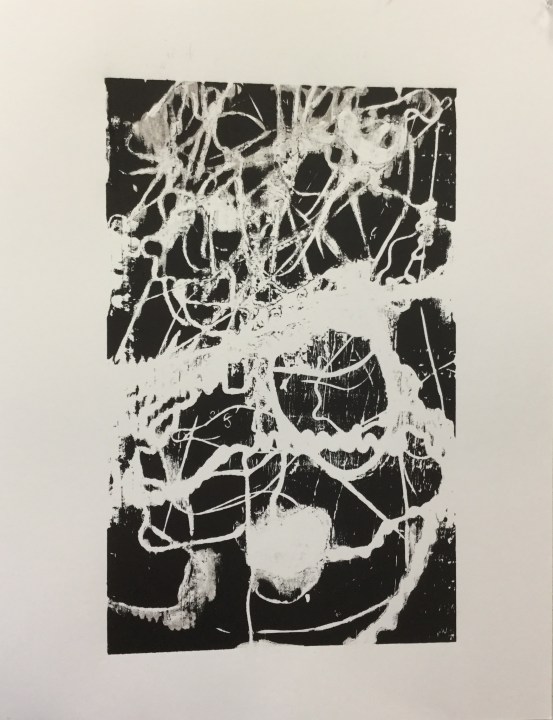
Other Prints


 Grace Dunham