Marky Mark

Assignment:

Create 10 mark making tools
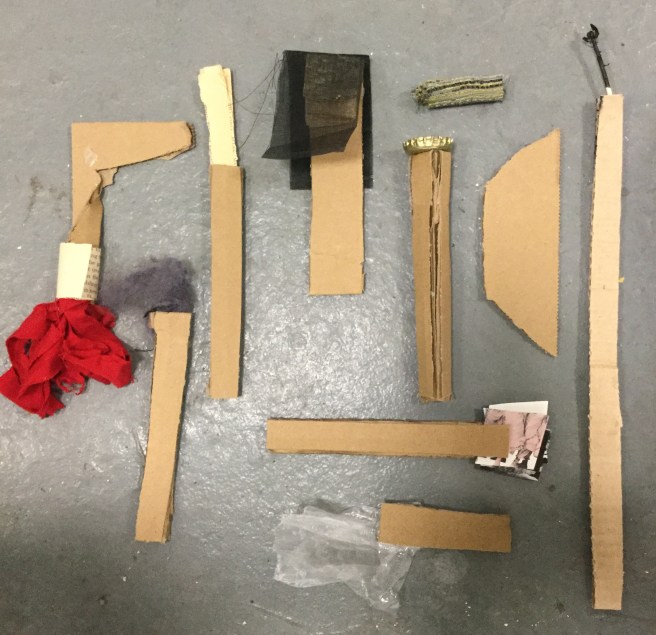
img_2087.jpg

3 wall-based paper installations which demonstrate form, value, texture, surface, and all the glorious variants thereof. Get close up. Ensure your composition is strong, taking in to consideration visual balance, weight, and interest. Use a viewfinder if necessary. Each of the below use a full sheet of supplied paper.
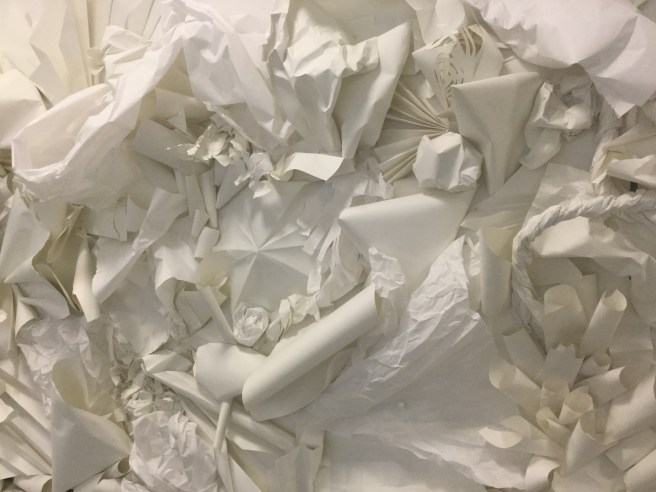
IMG_2083

By next class you are to complete the following time-based exercises:

EXERCISES MUST BE COMPLETED IN ORDER and be present at critique.

A: 3 x 30 Minute Mark Making Drawings

1.  Using gouache and your marking-making tools (no paint brushes, refer to your mark making research.)
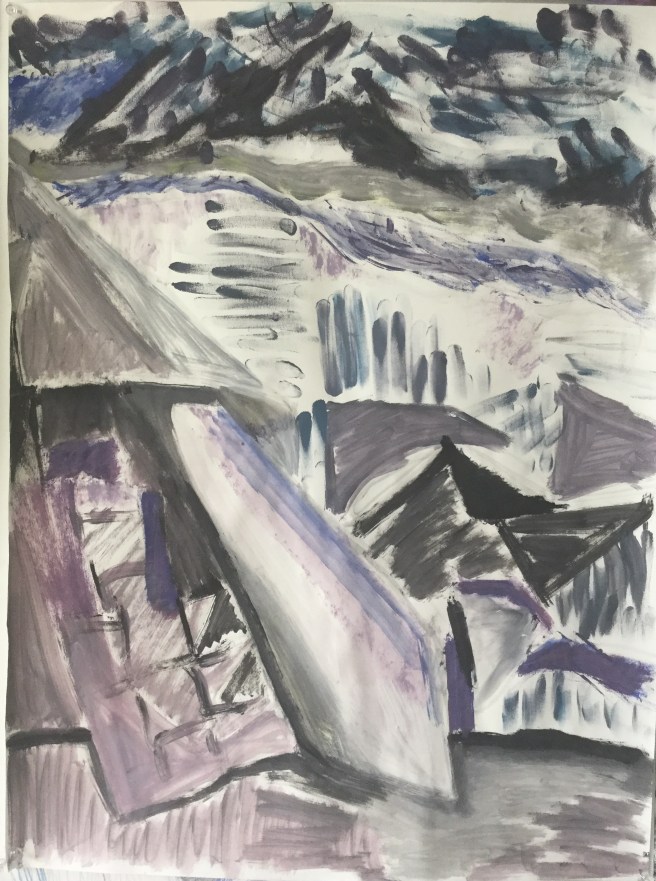
IMG_2149

2.  Using charcoal only (focus on the shifts of color… translate to value)
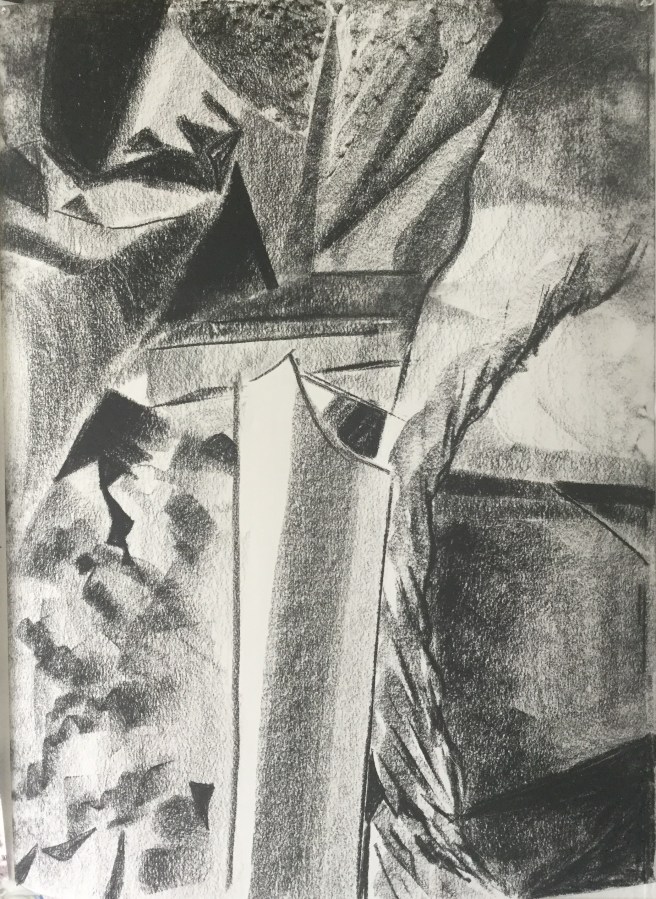
img_2148.jpg

3.  Using colored pencil only, build up layers of detail, match colored pencil to light intensity as closely as possible.
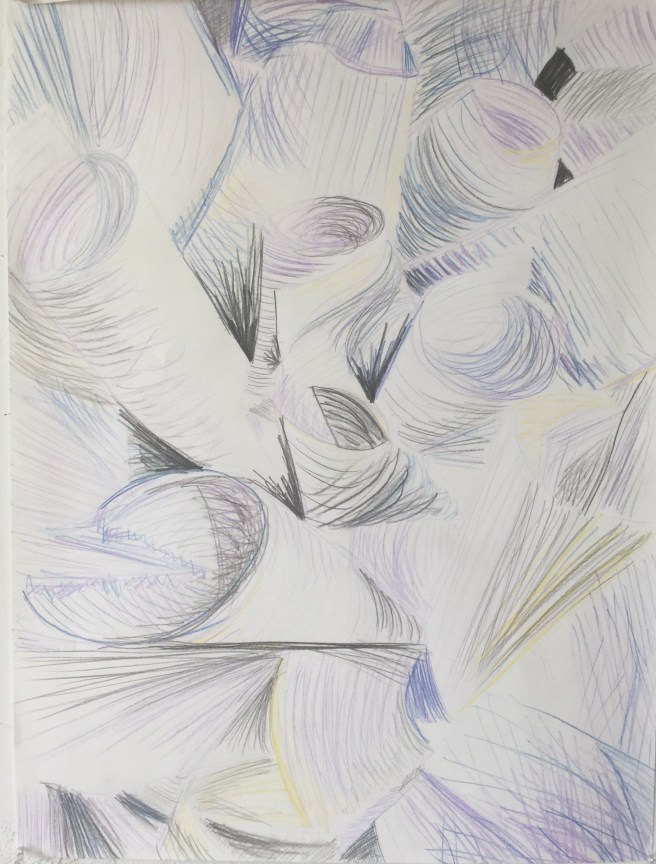
IMG_2145

B: 3 x 60 Minute Mark Making Drawings
1.  Using charcoal and additive + subtractive methods (erasers / blending) and using a variety of relevant marks, as demonstrated in your Texture Book, express color as mark
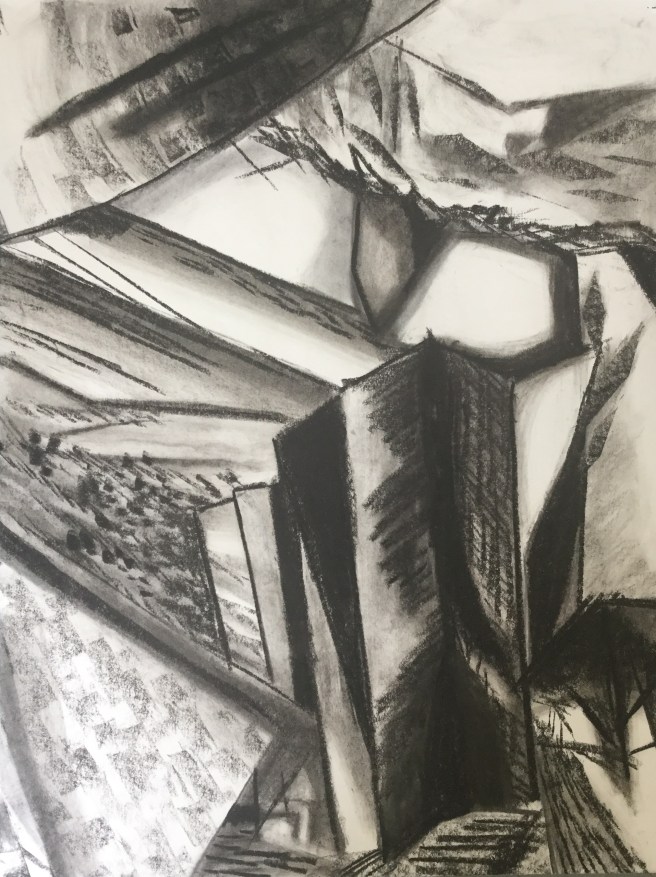
IMG_2147

2.  Using gouache (no paint brushes), replicate composition B1
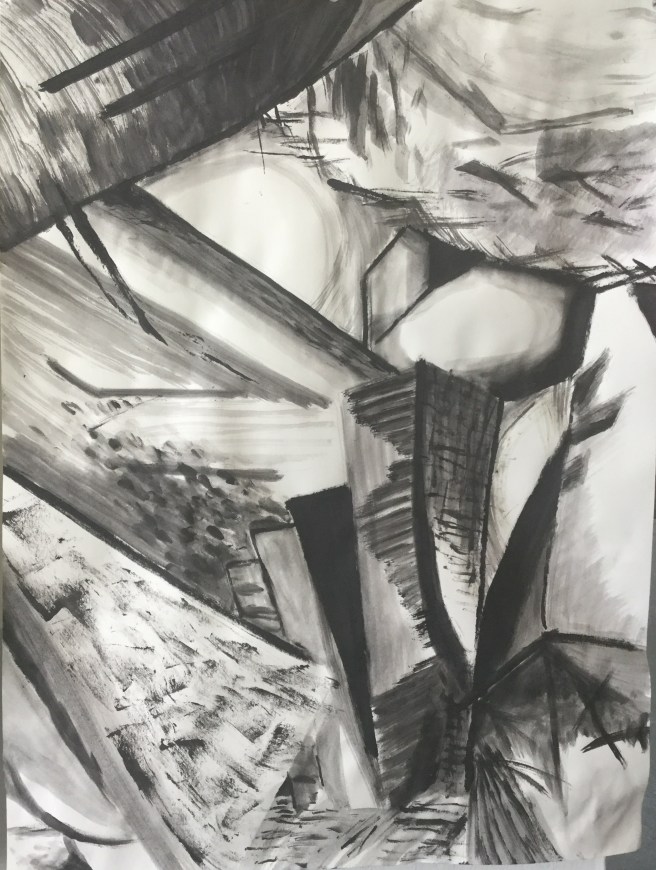
IMG_2146
3.  Using colored pencil only, consider blends and your mark making capabilities. Explore cross-hatching methods. Match colored pencil to light intensity as closely as possible.
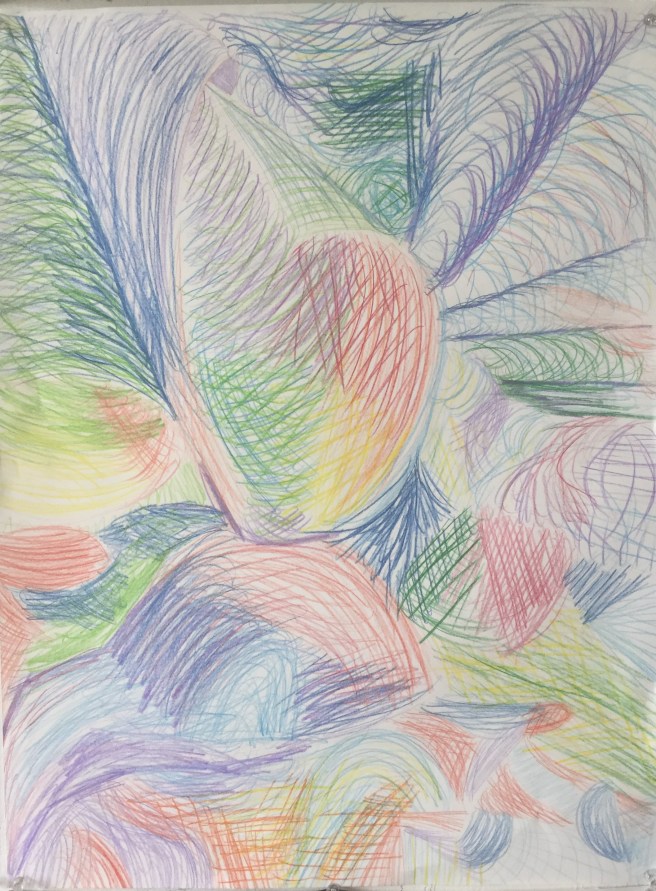
IMG_2144

C: 2 x 180 Minute Mark Making Drawings
1.  Using black gouache and your mark making tools (no paint brushes), demonstrate your understanding of color through mark making. No shading, no blending, and no gradients. How can we perceive different values through mark making alone?
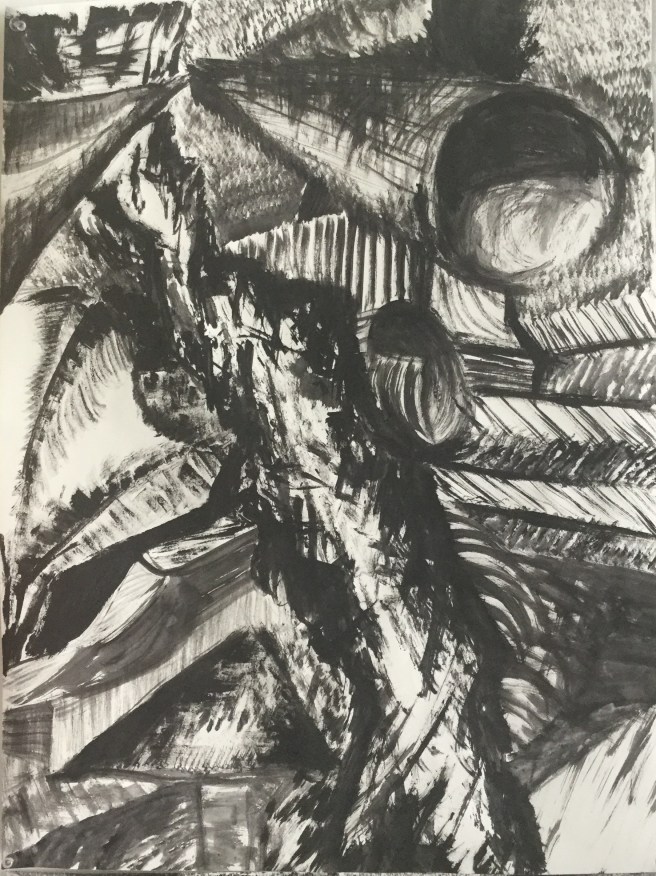
IMG_2150

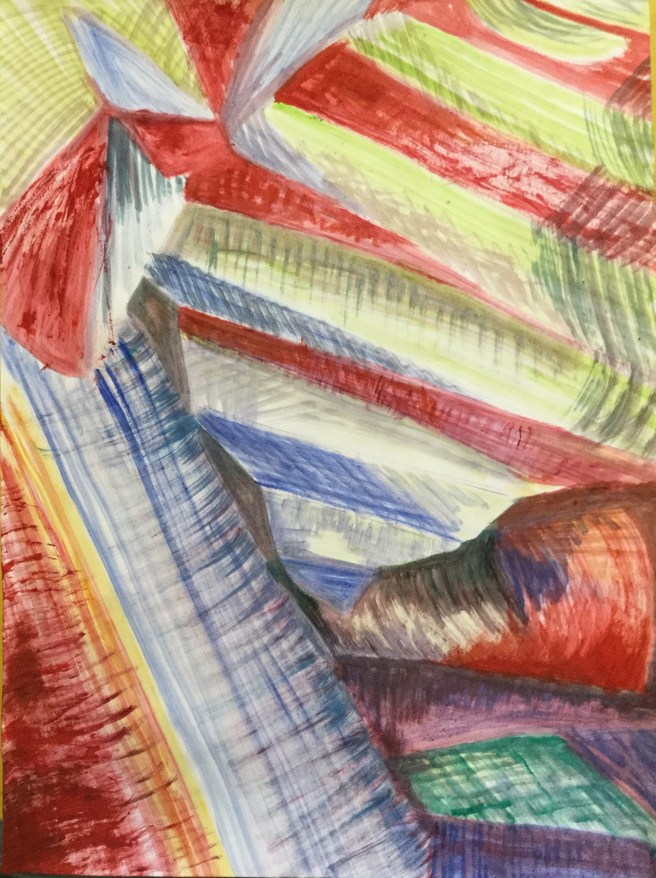
2.  Using gouache (color!) and your made tools, make appropriate marks to most accurately and realistically portray your still life. No black.
img_2139-e1555190813663.jpg

Reflection:

While working on these I was very frustrated. I felt like I did not have enough time and that the work I was making was not up to my own expectations. I worked very fast and loose for most of these which I think is the only reason I managed it. I had a lot of trouble with my first 30 min colored pencil drawing because the pencil was so light. For the hour long one I was practically stabbing the page and most of the time held the pencils in a tight fist. I had to sharpen them every minute or so, but the final result was much more vibrant.

Gouache is an evil evil medium and I initially hated it. I tried to treat it like acrylic and it was so sticky and hard to get across the page using my homemade mark making tools. I used my fingers for most of the 30 min. I figured out that the best way was to layer the gouache thin (but not too much or it gets really gross and muddy). For my hour long gouache I had to replicate my charcoal one. I actually really enjoyed this because I didn’t have to work from life. I tacked my charcoal to the wall and knowing how I made the charcoal marks, tried to replicate every aspect of that drawing. Even the order in which the marks were made to that the layers would come out correctly.

During the struggle with gouache I slowly adapted. I think this is most clear in the three hour color gouache. I spent an hour and a half laying our a base layer of color and forms and then came back the next day and filled in shadow and intensity of light. This was probably my favorite one in the end.

Finishing this project was so satisfying. As with a lot of things while it was happening it was very stressful but now that its over I can look back and move on to the next step in the process.

Spectral Analysis Board

Our assignment this week was to research a given color. My color was coquelicot, the color of red orange poppies. We had to create a museum quality informational board with a 24 step value scale and a collage from pictures using our color. In addition, we also had to collect 25 objects that are our color.


Sources for info on the board:

https://www.sciencedaily.com/releases/2019/02/190208115304.htm

http://www.arteqo.com/en/guide/color/coquelicot/

https://rgbcolorcode.com/color/coquelicot

Reflection:

I had some trouble using gouache for the value scale. It was difficult to keep the color even because the gouache thinned in spots when I painted second and third coats. If I was to redo this project I would include visual examples of what my written information was about. I think the most successful part of this piece are the poppy collages. I think the contrast on the white background is really eye catching. I experimented with writing in a different font for this project. I liked the Adobe font, Pinot Grigio Modern for its design of the letter Q. I wrote the text in the font and I think it helps with clarity as opposed to my natural handwriting. I think its most successful in the title. Which is very readable form a distance and grabs a viewers attention.

The next part of this project was group installation of all of the boards on one wall with our combined collected objects.

Natural Light Literature

We had to find a poem, book, song, etc about light. I chose John Donne’s The Sun Rising

The Sun Rising

John Donne

Busy old fool, unruly sun,
Why dost thou thus,
Through windows, and through curtains call on us?
Must to thy motions lovers’ seasons run?
Saucy pedantic wretch, go chide
Late school boys and sour prentices,
Go tell court huntsmen that the king will ride,
Call country ants to harvest offices,
Love, all alike, no season knows nor clime,
Nor hours, days, months, which are the rags of time.

Thy beams, so reverend and strong
Why shouldst thou think?
I could eclipse and cloud them with a wink,
But that I would not lose her sight so long;
If her eyes have not blinded thine,
Look, and tomorrow late, tell me,
Whether both th’ Indias of spice and mine
Be where thou leftst them, or lie here with me.
Ask for those kings whom thou saw’st yesterday,
And thou shalt hear, All here in one bed lay.

She’s all states, and all princes, I,
Nothing else is.
Princes do but play us; compared to this,
All honor’s mimic, all wealth alchemy.
Thou, sun, art half as happy as we,
In that the world’s contracted thus.
Thine age asks ease, and since thy duties be
To warm the world, that’s done in warming us.
Shine here to us, and thou art everywhere;
This bed thy center is, these walls, thy sphere.

Source: https://www.poetryfoundation.org/poems/44129/the-sun-rising

Sun Graffiti

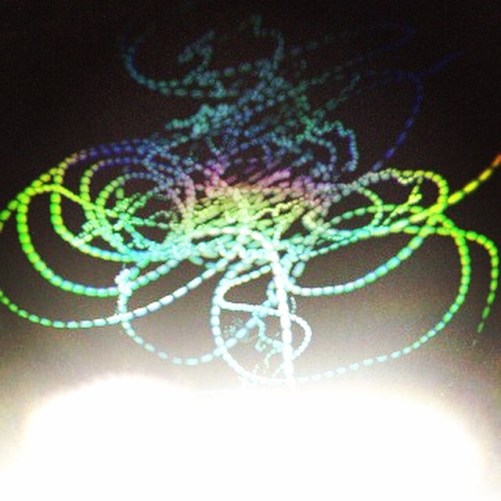
Earth hour was on Saturday the 30th from 8:30pm – 9:30pm. During earth hour participants from around the world shut off their electricity. We were tasked with creating a light drawing using long exposure photography. I used the apple app slow camera, and just played around with using bright lights and colored lights. I found that I could get this cool mirrored rainbow effect that I wound up posting because I love the way the color spectrum is shown.

F73BE481-6B8D-46BB-A616-F88845EF4A08

This slideshow requires JavaScript.

Sol LeWhat!? (Wednesday March 27)

11:20am – 1:30pm

From a single point on your wall draw three lines to similar points on each of the other group’s walls.

No saggy!

photo (11_55_12)

2:00pm – 5:30pm

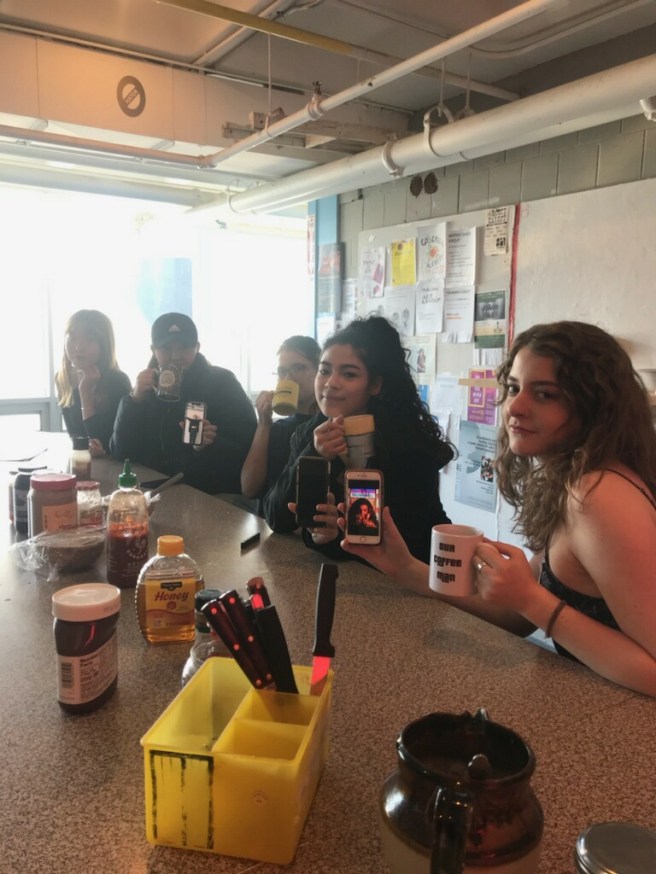
Get a coffee with your entire group. Discuss the week and what you have accomplished. What have you learned? What were the frustrations of group work? Did anyone not pull their weight?

Take notes.

imagejpeg_1

We had to all get coffee together but many of our group members had classes, so it was impossible for us to all be there at the same time. We held up photos of our other group members so they could participate in this group photo. As for discussion, we have been discussing all week and bonding over our hatred of this project 🙂

8:00pm – 10:05pm

Being aware of the wool around you…
Rotate counterclockwise to the other group’s wall space. Sit on the floor as a group. Analyze the composition of the wall. Give a visual analysis of this group’s outcome. What are the successes? What needs improvement? Give eight solid bullet points of a response and give the critiqued group a letter grade.

Group 1 Analyzing Group 3
● Attention to detail (Success)
● Accurate form using line segments to create a circular shape (Success)
● A variety of line thickness (Success)
● Utilized their entire space (Success)
● Having a wider variety of scale (Improvement)
● Composition could have been cleaner and more spaced out (Improvement)
● Variation of line length Improvement
● Lines could have been tighter and pinned down (Improvement)
B+
imagejpeg_0-1

I had an SI session for physics so I was not able to participate in the discussion directly, but texting over the groupchat was very helpful for distance communication.

Sol LeWhat!? (Tuesday March 26)

Bonus 6am – 11:59pm

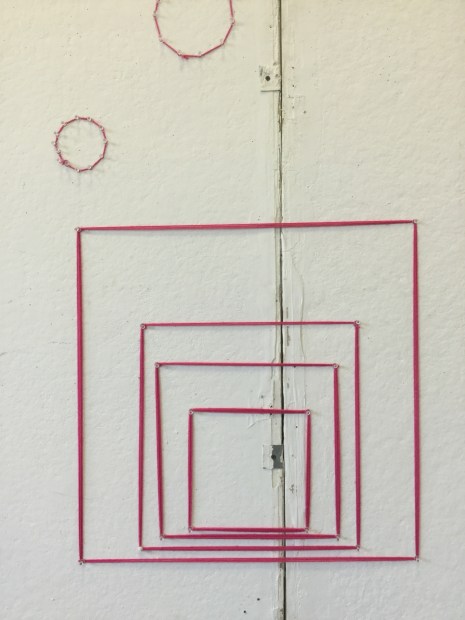
Create an homage to Homage to the Square: With Rays, by Josef Albers.

photo (6_45_55 PM)

We wrapped the pins to make super bold lines so that the squares would stand out.

11:10am – 7:00pm

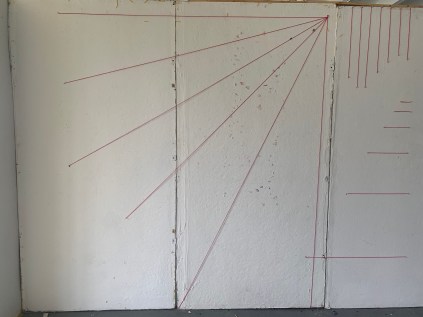
From the center point of two parallel lines, draw another perpendicular line that bisects another set of parallel lines to create a diagonal. Repeat two more times, changing the scale each time.

I had class at 11:10 and my group was meeting so I drew up a quick plan for our lines. Dividing work and communication through the group chat has been very beneficial to our success as a group.

8:52pm – 11:02pm

Using 27 18” vertical lines, stagger them exponentially starting with 1” spacing, increasing by increments of .5”. The top of these lines should be at the highest reach of the tallest member of the group.

photo (9_19_04 PM)

Sol LeWhat!? (Monday March 25)

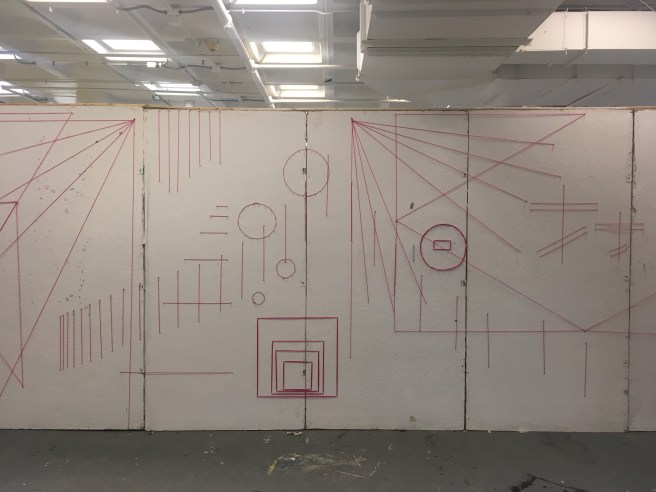
At three times during the day our group of eight people must go into the studio and use string to accomplish a set of instructions given to us by our professors.

11:10am – 2:10pm

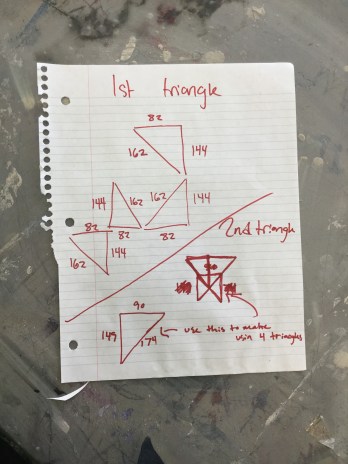
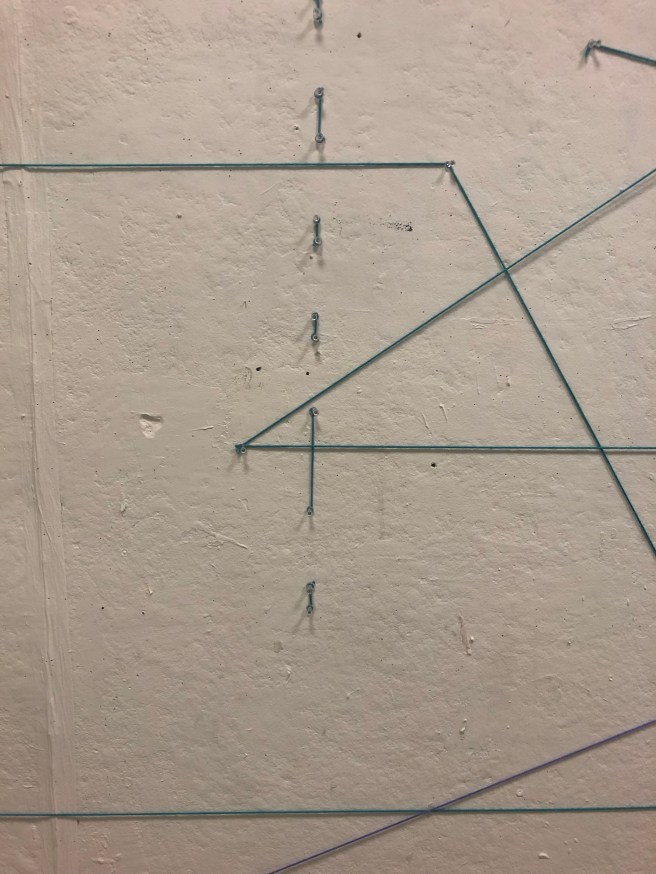
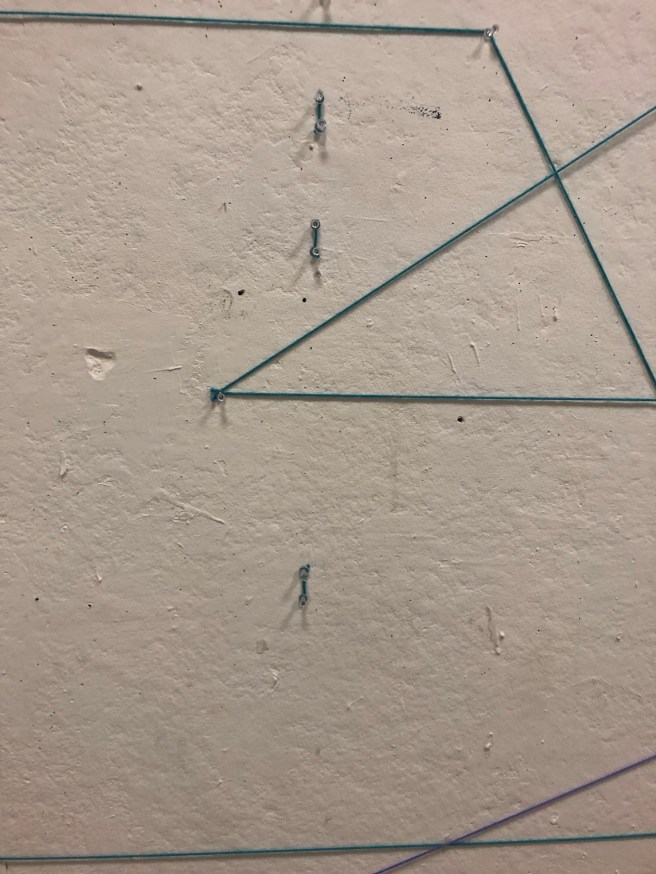
Using the two images provided, take note of the measurements on the right angle triangles.


Position each triangle, to scale, on the wall.
One triangle…
Flip it. Second triangle must touch one point of first.
Flip it. Third triangle must touch one point of second.
Flip it. Fourth triangle must touch one point of third triangle.

Second triangle…
Flip it. Second triangle must bisect the first.
Flip it. Third triangle must bisect the second.
Flip it. Fourth triangle must the third.

IMG_2027

Our group came in at different times to complete different parts of this task. I drew up the plan. Others cut strings and hung up the final two arrangements.

2:45pm – 6:45pm

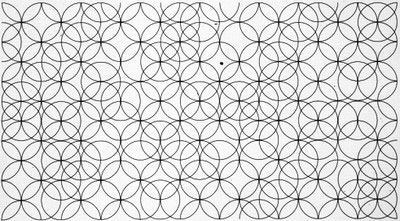
Find Bridget Riley’s work, titled Composition with Circles. Draw 4 circles.

itemsfs_670

Bridget Riley’s Composition with Circles (above)

photo (2_55_37 PM)

8:45pm-11:45pm

Take one line from another group’s wall, without disturbing their composition. Install that line on your own wall exactly how it appeared on the other group’s wall.

Upload 3 pics.

1) Before: Other group’s wall.

photo (8_49_27 PM)

2) After: Other group’s wall minus the line taken.

photo (8_49_59 PM)

3) Other group’s line installed on your wall.

photo (8_50_38 PM)-1

Sol LeWhat!? (Sunday March 24)

At three times during the day our group of eight people must go into the studio and use string to accomplish a set of instructions given to us by our professors.

10:00am – 12:30pm

Duplicate an element of another group’s pattern, but bigger.

IMG_1875

3:30pm – 6:45pm

Find a YouTube music video that relates to either: line, repetition, and/or  mark making.
Upload the video link and a few sentences to explain your decision.

Perform a scene from the video in front of your work (note exact time stamp).

Music Video

We chose this music video because it incorporates all three elements, line, repetition, and mark making. It shows these elements through its use of sketchy comic book animation that the protagonists hops in and out of throughout the whole music video.

Scene that we recreated from the music video

9:59pm – 12:59am

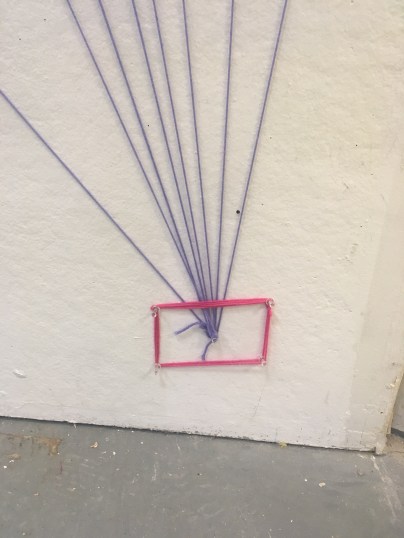
Create one quadrangle. Still using your team’s wool color, infiltrate one other groups wall space. Duplicate exactly the same quadrangle within their wall space.

photo (10_04_54 PM)-1.jpg

Tired from a long day our quadrangles are a pair of teensy tiny rectangles. We wrapped them multiple times with string to make them very bold and stand out against the wall.

Sol LeWhat!? (Saturday March 23)

At three times during the day our group of eight people must go into the studio and use string to accomplish a set of instructions given to us by our professors.

8:50am – 12:30pm

Mark the arch of each member’s wingspan. Consider the composition.
Upload one pic per group member’s arch… with group member demonstrating.  One point each.

This slideshow requires JavaScript.

Our group measured and cut strings to the length of the wingspan of its members and then curved them into arcs and arranged them on top of one another.

5:00pm – 5:35pm

Using the wingspan measurement from each group member once, create a composition of straight lines. All members’ lines must touch at a one point.

Our group took our lines from the previous assignment and rearranged them for this set of instructions.

10:30pm – 2:50am

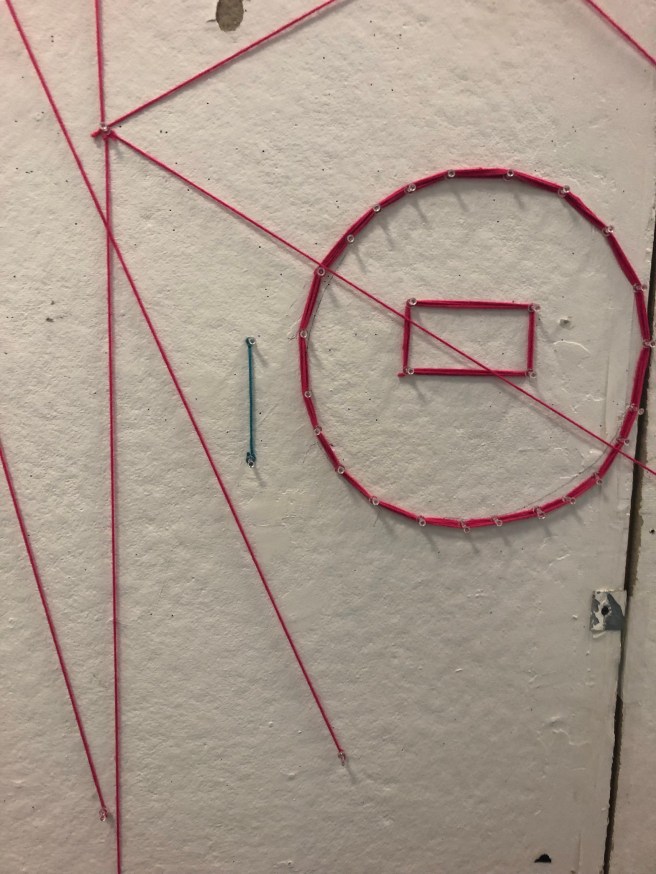
Make a perfect circle.

Our group traced a stool and marked the edge with pins, we then wrapped the pins multiple times with string to hide the straight lines between each pin.

Sol LeWhat!? (Friday March 22)

At three times during the day our group of eight people must go into the studio and use string to accomplish a set of instructions given to us by our professors.

10:45am – 5:45pm

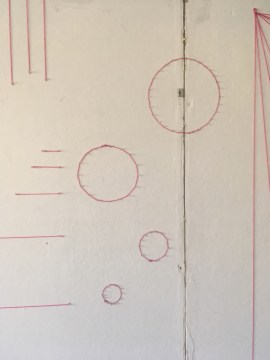
Convert the letters of your FULL first and last name into their numerical value as determined by the most funnest game in the world: Scrabble. Assume this numerical number is in inches, arrange them vertically in alphabetical order with 3” spacing, from the absolute top of your wall space. All group members must contribute.

Our group decided to convert all of our names to a total scrabble score and place a string of that many inches on the wall. The strings are organized by our names alphabetically from right to left.

6:15pm – 10:00pm

Night Owl
Within your dedicated space, create 6 perfectly horizontal and parallel lines, separated in relation to the Fibonacci sequence.

Our group decided to space the lines out and cut the lines based on the Fibonacci sequence. The lines were spaced 3, 5, 8, 13, and 21 inches apart. The lines were cut at 3, 5, 8, 13, 21, and 34 inches.